
Omega - Live video chat
Omega Tech.Social
3.63.32K Reviews
- Version
- 7.5.0
- Installs
- 10.00M
- Age Rating
- Mature 17+
Screenshots

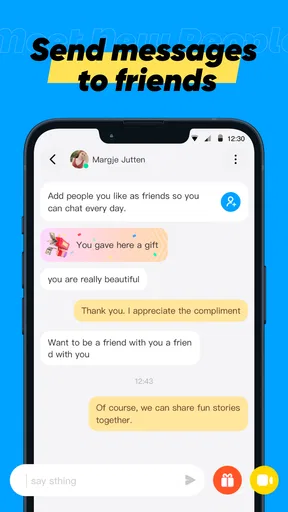


Our Review of Omega - Live video chat
 Analysis by Appyee
I tried Omega as a social app built around live video conversations, and my first impression was that it is designed for people who want interaction to begin quickly rather than through a long profile-building process. The basic idea is simple: open the app, enter a live video chat, and meet someone interesting. That immediacy is its strongest appeal, but it also creates the main reason to use it carefully. You are trading the predictability of a familiar social network for the surprise of speaking with people you do not already know.
Omega is developed by Omega Tech. and sits in the social category rather than functioning like a traditional messaging client, dating profile service, or group community. It is free to install, carries a Mature 17+ age rating, and supports devices running Android 6.0 or later. The current version is 7.5.0, while the app first appeared on December 1, 2019. Those details matter because the experience is aimed at an adult audience and should not be treated as a casual children’s chat tool.
The app has reached over 10 million installs, with an average rating of 3.6 from around 112 thousand ratings and roughly 3.3 thousand written reviews. That combination suggests a sizeable audience but also a mixed experience. I would not read the popularity as proof that every conversation will be enjoyable. Instead, it tells me that Omega has enough activity to make spontaneous matching its central attraction, while the middling average is a useful reminder to keep expectations realistic.
How the free experience feels in everyday use
The most useful way to understand Omega is to imagine a short window of free time. You have finished work, you are waiting for a friend, or you simply want a conversation that is less formal than joining a large online community. In that situation, a live video chat app can feel more direct than scrolling through posts. You are not only reading someone’s carefully edited update; you are reacting to a person in the moment.
That immediacy can make the app entertaining when you approach it with a clear purpose. I would use it for brief social discovery, casual conversation, or a change from text-based feeds. I would not open it expecting a reliable way to build a deep friendship during one session. Video puts more pressure on both people, and an awkward match is harder to ignore than an uninteresting message that can simply be left unread.
The free entry point is important here. You can decide whether the style of interaction suits you before considering any optional spending. That is a better arrangement than paying before discovering that random live video is uncomfortable. For someone comparing Omega with ordinary social networks, the main free value is not a larger collection of posts or a more polished profile. It is the chance to move from browsing to conversation with less preparation.
At the same time, “free” should not be confused with unlimited value in every part of the experience. The app includes in-app purchases ranging from $0.99 to $199.99 per item. I treat that range as a reason to make a personal spending boundary before using any paid elements. Small purchases can feel harmless when they are connected to quick interactions, while a high-priced option deserves much more deliberate consideration. The sensible approach is to enjoy the free side first and only pay when the benefit is clear to you.
I also would not judge the app by how many people are available at a particular moment. A large user base can improve the chance of finding an active conversation, but it cannot guarantee compatibility, good manners, or a useful exchange. The quality of a live chat depends on the individual match, the timing, and how comfortable both people are on camera. That is a different value proposition from a social platform where you can choose content slowly and control when you respond.
What you are really paying for
Because Omega is free to install and offers in-app purchases, its paid value should be judged by convenience or extra participation rather than by assuming payment is necessary to discover what the app does. I would only consider spending after identifying a repeated limitation in my own use. If the free experience already gives me enough conversations, paying would not automatically make those conversations more meaningful.
This is also where the exact purchase range deserves attention. An item priced at $0.99 is a very different decision from one priced at $199.99, even though both appear under the same in-app purchase model. I would never treat the upper end as a casual add-on. Anyone sharing a device or payment method should be especially careful, because live social apps encourage quick decisions and the emotional pace can make spending feel connected to the conversation.
The value of a paid option is therefore personal and situational. A frequent user may decide that an optional feature saves time or makes the experience more enjoyable. A newcomer should not assume that payment is the shortcut to better people or safer conversations. Nothing about a purchase can replace judgment when deciding whether to continue a video chat.
Small habits that make the experience better
My first practical tip is to use short sessions rather than leaving the app open without a plan. Give yourself a simple goal, such as having a few relaxed conversations, then stop when the experience becomes repetitive. This prevents the rapid matching rhythm from turning into passive scrolling with a camera attached.
Second, prepare a neutral opening question before starting. Live video can become awkward when both people wait for the other to speak. A question about hobbies, travel, music, or what brought them to the app gives the conversation somewhere to go without requiring you to reveal personal information. If the other person responds poorly, you have learned enough to end the interaction without trying to rescue it.
Third, keep private details out of the early conversation. I would avoid sharing a home address, workplace routine, financial information, personal account details, or anything that makes it easy for a stranger to identify or contact me elsewhere. This is not an accusation against every user; it is simply the sensible trade-off of meeting people through spontaneous video.
A less obvious benefit of this approach is that it lets you evaluate the app’s social rhythm before deciding whether it belongs in your regular routine. Some people enjoy the unpredictability. Others discover that they prefer text, communities organized around interests, or conversations with people they can choose in advance. Finding that out through a short free trial is more useful than assuming popularity means it will fit your personality.
The trade-offs behind spontaneous video
Omega’s central strength is also its main weakness: the low barrier to a live conversation. You can reach a human interaction faster than on platforms that require a profile, mutual following, or membership in a topic-based group. But less preparation means less context. You may know very little about the person before the camera connects, and that can produce either a pleasant surprise or a conversation that ends immediately.
Compared with a standard social network, Omega is more active and less curated. A normal feed lets me choose what to read, pause whenever I want, and communicate through carefully considered text. Omega asks me to participate in the moment. That is better when I want spontaneity, but worse when I want control over pace and presentation.
Compared with messaging apps, it is less convenient for maintaining an existing relationship. Messaging is usually the better choice when I already know whom I want to contact, need to send information, or want a record of a conversation. Omega makes more sense when the goal is meeting someone new rather than reaching a specific friend.
Compared with interest-based communities, it offers less built-in context for finding people who share a particular subject. A forum or group can make it easier to begin with a common hobby, while Omega puts more weight on the first few seconds of personal interaction. If your priority is discussing a niche topic with informed participants, a focused community may deliver more value.
There is also a comfort trade-off. Not everyone wants to appear on camera, and not every setting is suitable for live video. A quiet room and a stable connection help, but the larger issue is emotional readiness. If you are tired, anxious, or looking for a carefully moderated environment, random video chat may feel like work rather than entertainment.
Who is most likely to get value
I think Omega is a reasonable fit for adults who enjoy meeting unfamiliar people and can handle conversations that vary widely in quality. It may suit someone who finds text feeds passive and wants social contact that feels more immediate. It can also work for users who enjoy short interactions without needing every new contact to become a lasting connection.
The app is less suitable for anyone under the stated age rating, people who are uncomfortable with spontaneous camera conversations, or users seeking a dependable way to contact friends. It is also not my first recommendation for someone who wants a structured dating experience, detailed compatibility tools, or a community organized around a specific interest. Those goals benefit from services that make identity, intention, or subject matter clearer before conversation begins.
For a cautious first session, I would use the app in a private but appropriate setting, avoid spending, and decide in advance how long I want to stay. I would end a chat as soon as it becomes disrespectful or uncomfortable instead of treating persistence as politeness. That workflow gives the free experience a fair test while keeping the user in control.
One question many potential users have is whether the app is worth installing if they do not intend to buy anything. My answer is yes, provided spontaneous video is genuinely appealing to them. The free access is enough to evaluate the core concept. Another question is whether a large audience guarantees better matches. It does not; it improves opportunity, not compatibility. A third is whether Omega can replace ordinary messaging. In my view, it cannot, because its purpose is discovery and live interaction rather than dependable communication with known contacts.
My verdict on installing or skipping it
After weighing the free access, the live format, and the purchase range, I see Omega as a trial-first social app rather than something I would recommend automatically to everyone. Its best quality is the speed at which it turns spare time into a possible conversation. Its biggest limitation is that the same speed removes much of the context and control people expect from established social platforms.
I would recommend trying it if you are an adult who enjoys unpredictable conversations and wants to explore a different kind of social interaction without paying up front. I would keep purchases optional until the app has clearly earned a place in my routine. The free starting point makes that decision straightforward, while the broad in-app purchase range means restraint is important.
I would skip Omega if you want carefully selected contacts, topic-focused discussion, private communication with friends, or a calm experience where you control every interaction. In those cases, a messaging app, conventional social network, or interest-based community is likely to be a better match. For the right user, though, Omega delivers a distinct kind of value: not a guaranteed great conversation, but a quick chance to have one. My recommendation is to try the free experience with firm privacy and spending boundaries, then keep it only if the spontaneity feels rewarding rather than exhausting.
Verdict
Strengths of Omega - Live video chat
- Quickly connect with people through live video conversations.
- Simple interface makes starting a chat easy for new users.
- Supports spontaneous social interactions with users worldwide.
- Video format feels more personal than standard text-based messaging.
- Useful for meeting people with different interests and backgrounds.
Limitations of Omega - Live video chat
- Public video chats may expose users to inappropriate behavior or content.
- The quality of conversations can vary considerably between users.
- A stable internet connection is needed for smooth video streaming.
- Privacy may be a concern when interacting with unknown people online.
- Frequent notifications can become distracting during regular use.
Similar Picks in This Category
View All
Meta Platforms, Inc.4.6

Instagram4.0

Likee-Live, Chat & Party Games
Likeme Pte. Ltd.4.4

Facebook Lite
Meta Platforms, Inc.4.5

TikTok - Videos, Shop & LIVE
TikTok Pte. Ltd.4.0

Moj: Free Short Drama & Reels
ShareChat4.1
Frequently Asked Questions
What is Omega - Live video chat, and how does it work?
Omega - Live video chat is a social discovery app that lets users connect with strangers through live video or text conversations. After creating a profile, you can browse or be matched with people from different locations and start a conversation. The experience is designed for spontaneous interactions, so the people you meet and the quality of each chat can vary considerably.
Is Omega - Live video chat free to download and use?
The app can generally be downloaded for free, but some features may be limited or supported by optional in-app purchases. Depending on the current version, users may encounter premium tools, virtual items, filters, or other paid options. Before confirming a purchase, check the pricing shown in the app store and review the subscription terms carefully, especially if a trial period is offered.
Is Omega - Live video chat safe for teenagers and younger users?
Users should check the current age rating and privacy policy before installing Omega. Because the app connects people with strangers through live communication, conversations may include unexpected or inappropriate behavior despite moderation tools. Parents should discuss online safety, avoid sharing personal information, and consider device-level parental controls. Younger users should not use the service without appropriate supervision.
What privacy and safety precautions should I take while using Omega?
Avoid sharing your full name, home address, school, workplace, phone number, passwords, financial details, or private social-media accounts with people you meet. Use the app’s block and report functions when necessary, and end any conversation that makes you uncomfortable. It is also wise to review camera, microphone, location, and notification permissions and disable access that is not required.
What should I do if I encounter inappropriate content, harassment, or a fake profile?
If another user behaves abusively, requests personal information, sends inappropriate material, or appears to be impersonating someone, stop communicating and use Omega’s reporting and blocking tools immediately. Do not send money or agree to meet privately based only on an online conversation. Save relevant evidence when possible, and contact the platform’s support team or local authorities if there is a serious threat.
